Friday, December 30, 2011

Eastern Libya poll indicates political Islam will closely follow democracy

If Libya manages to forge a political system where majority views are taken into account it's clear that political Islam is set to play a major political role.

A new poll of eastern Libyan public opinion released last week indicates that political Islam is set to play a major role in the country's future if institutions emerge that take into accout the will of the general public.

Skip to next paragraph

The poll sponsored by the International Republican Institute (a US-government funded non-profit) found a high degree of optimism about the future, concerns about the security situation in the country, and?conservative (and somewhat contradictory)?attitudes when it comes to?faith and politics.

In Eastern Libya, 83 percent said freedom of the press was "important," and 71 percent said it was important to have laws giving equal rights to "religious and tribal groups," which would seem to indicate concern for protecting minority rights. But 94 percent agreed with the proposition that "people should be prohibited from offending" religions and 85 percent agreed that "religion should be part of government" (68 percent of those "strongly agreed.") Asked about whether a "secular" state was a good idea, 69 percent of Libyans dissaproved against 14 percent that approved.

None of this means that a Saudi Arabian style regime is in the offing. Many Arab's take the word "secular" to mean something like "Godless," so the notion of secularism is offensive. But there's a long continuum from there to religious rule.?But over time, it would be natural for groups like the Libyan version of the Muslim Brotherhood, which has emerged as the dominant power in Egypt's ongoing parliamentary elections, to develop a major voice in politics (Qaddafi suppressed?Islamist political activism as ruthlessly as he did all other challenges to his rule). ?

The poll was carried?out in mid-October,?as Muammar Qaddafi's hometown and last bastion, Sirte, was falling to the rebellion, which?probably?pushed results in a positive direction. Not only did optimism surge at the time of Qaddafi's death, which effectively ended the civil war, but eastern Libya was less touched by the ravages of war than Western towns like Tripoli, Sirte, and Misrata.

But the numbers are still striking. In Eastern Libya, 84?percent of respondents said they were positive about the?future and that the National Transitional Council (NTC), the unelected group that's promised to guide Libya to democracy, were doing a good job. Meeting these high expectations may be a challenge though.??

Asked what government priorities should be, 97 percent said it was "very important" for the? government to provide food and housing for?the poor and 72 percent said it was "very important" for the government to "play a central role in the economy and business sector."?The context for?that second answer is that Libya's oil wealth has made the government the country's largest employer, by far. Though they may have hated Qaddafi, Libyans agreed with him that it's the state's responsibilty to deliver jobs and economic growth,. You can expect whatever government emerges to play a dominate role in the economy, at least in the medium term.

Follow Dan Murphy on Twitter.

Source: http://rss.csmonitor.com/~r/feeds/csm/~3/k-x5ivRiGKM/Eastern-Libya-poll-indicates-political-Islam-will-closely-follow-democracy

monday night football bonjovi bonjovi kim jong un antonio brown james harrison james harrison

Thursday, December 29, 2011

Elephants race, play soccer in Nepal festival (AP)

CHITWAN, Nepal ? Soccer-playing elephants used all four feet and even their trunks trying to score goals. Racing pachyderm thundered to the finish line to the cheers of the crowds. And in the elephant beauty pageant, contestants sported nail polish on their not-so-dainty toes.

It was all part of an elephant-themed festival in Nepal that wrapped up Wednesday. The three-day event was held to promote conservation awareness and lure foreign visitors to Nepal.

The elephants were trained for weeks for the games, taking time off their normal jobs carrying tourists through protected jungles near Chitwan. The conservation forest has rhinos, several species of deer and crocodiles and is a popular tourist spot some 106 miles (170 kilometers) south of the capital, Katmandu.

"We hope that the elephant festival will help bring more tourists to Chitwan. We need both foreign and domestic visitors," said Ghanashyam Shrestha, one of the organizers.

Tourism is picking up in Nepal as it slowly recovers from a 10-year Maoist insurgency that killed more than 13,000 people. The conflict ended after the rebels gave up their armed revolt and joined a peace process in 2006.

But the tourists who mainly come to hike the Himalayan country's many mountains aren't returning fast enough for some. Nepal received some 600,000 visitors in 2010, short of the goal of 1 million set by the government declaring the Nepal Tourism Year.

Organizers of events like the elephant festival ? which draws on a popular elephant polo event held elsewhere in Nepal ? hope more colorful events will increase interest in tourism.

The final event, a 300-meter race, was won by an elephant named Bajadur Gaj, who pounded his way to the finish line in 69 seconds as thousands of locals and foreign tourists cheered.

Teams of four elephants also played soccer matches using a standard-size ball . The elephants blocked passes, kicked the ball and batted it with their trunks, pushing each other for control of the play.

"Training the elephants to play soccer was not easy but they learned the basic command. They understood they need to hit the ball when I yell 'kick' at them," said Basudev Mahato, 37, an elephant mahout who has been training and riding elephants for 15 years.

The elephants are between 4 and 5 years old. Young ones are easier to train and run faster, Mahato said.

At the Hattishar elephant camp, trainers and workers cleaned up the elephants, fed them a special meal of rice and sugar wrapped in grass and painted them to prepare them for the event.

Over at the beauty pageant, a trainer painted white patterns on an elephant named Loktantrakali, then varnished her toenails bright red.

Judges ? who checked contestants bodies' for scars and overall beauty and also watched them perform tricks ? picked Loktantrakali as the second-prize winner.

Source: http://us.rd.yahoo.com/dailynews/rss/asia/*http%3A//news.yahoo.com/s/ap/20111228/ap_on_re_as/as_nepal_elephant_racers

john mccarthy lumpectomy robin williams blaine gabbert netflix stock home affordable refinance program harp

Wednesday, December 28, 2011

Business Matters: Why Spotify Royalties Are Greater Than Radio ...

December 27, 2011

Why Spotify Royalties Are Bigger Than Radio Royalties
-- Because of its large audience, radio is a more valuable revenue stream than on-demand subscription services. But when compared a revenue-per-listen basis, Spotify royalties exceed those paid by terrestrial radio in the U.S. and the U.K.? That's the conclusion of David Touve, an Assistant Professor of Business at Washington & Lee University who has long studied the music industry.

Per-listener, a spin on terrestrial radio ranges from $0.000186 to $0.000372 in the U.S. and from ?0.000299 to ?0.000498 in the U.K. ($0.0004 to $0.0007 at current currency rates), according to Touve's calculations. To arrive at these numbers Touve used publicly available financial and listening data. He incorporated many assumptions and needed to make one educated guess (the annual revenue of SESAC). His estimates cover a range of audience sizes for any given quarter hour as well as songs played per hours by radio stations. Note the U.K. figure includes both copyrights. In the U.S. only music publishers receive performance royalties for terrestrial radio.

Radio royalties may seem relatively large because people tend not to think of them in terms of revenue generated for transmitting a song to an individual listener. A single spin on terrestrial radio is heard by a large audience, and the performance royalties paid by a station is a function of its revenue. In contrast, payouts by on-demand services such as Spotify are reported as a per-play royalty. Thus, radio royalties seem big because many people are listening while on-demand royalties seem small because only one person is listening.

All four of Touve's radio estimates are far lower than what is typically paid out for a single play on Spotify (which splits a pool of revenue based on streaming activity). Take the range of U.S. terrestrial radio royalties of $0.000186 to $0.000372.? A typical Spotify payout of 0.3 cents per stream (an estimate based on Billboard sources and media reports) is 16.1 times greater than $0.000186 and 8.1 times greater than $0.000372. In addition, a 0.3-cent per stream royalty is nearly 3 times greater than the statutory royalty paid for a single stream by a non-interactive webcaster.

In other words, on-demand streaming generates more royalties for each time a single person hears a song. The biggest difference between radio and on-demand is the size of the audience. Radio royalties feel bigger because so many people listen to radio. And on-demand royalties feel small because so few people use services like Spotify.

An astute reader may note that a 0.3-cent Spotify payout is typical for the sound recording while U.S. terrestrial radio royalties cover only the composition. So this is a bit like comparing apples to oranges. But one should not easily dismiss the disparity between the estimates for radio and streaming royalties. Even if one adjusted radio royalties to include compensation for the sound recording, they would still lag behind streaming royalties. Indeed, Touve's estimates for U.K. radio royalties include both copyrights and still fall well behind streaming royalties.

Poor perception of streaming services' royalties can be explained, in part, by streaming services' paucity of listeners. As Touve notes, comparing royalties on a per-listen basis can change the perception of on-demand service's royaltyies. "Were the pool of money flowing from music services in the UK, such as Spotify, as large as that flowing from Radio, we might not be having these sorts of discussions," he writes. "Maybe someday both of these pools will be large. The bigger question than these present rates, therefore, is whether we should and how we might get to that version of someday."
( DavidTouve.com)

The Spirit of Christmas 2011: 6.8 Million iOS & Android Activations
-- Christmas day activations of iOS and Android devices totaled 6.8 million globally, 353 percent higher than the 1.5 million average established from December 1 to 20, according to Flurry. Christmas day 2011 was 140 percent higher than Christmas day 2010. How well do Flurry's numbers match the overall iOS and Android market? As Flurry explains, "more than 140,000 apps [use] Flurry Analytics," so "Flurry detects roughly 100% of all new iOS and Android devices activated each day."

App downloads saw a corresponding increase on Christmas day: iOS and Android app downloads totaled 242 million, up 125 percent from the December average. Flurry expects app downloads to total 1 billion from Christmas to New Year's Day.
( Flurry blog)

Pitchfork's NYC Bias
-- Does New York account for over 25 percent of Pitchfork's list of top 100 tracks because it has the world's best music? Maybe. But as Richard Florida explains at the Atlantic Cities blog, the list is "heavily skewed toward English language acts in the indie, alternative, and hip-hop genres." And New York has a lot of indie, alternative and hip hop artists.

More interesting is the Altantic's ranking of cities according to an artists-per-100,000 residents measure. Because of its small population, Eau Claire, Wisconson, home of Bon Iver, tops the list with 1.24 artists per 100,000 residents. The rest of the top ten are: Copenhagen (0.517); Madison, Wisconson (0.178); San Francisco (0.145); New York (0.145); Vancouver (0.142); Halifax, Novia Scotia (0.134); Columbia, South Carolina (0.130); Providence, Rhode Island (0.123); and Toronto (0.121).
( The Atlantic Cities)

Source: http://www.billboard.biz/bbbiz/industry/digital-and-mobile/business-matters-why-spotify-royalties-are-1005742352.story

greenhill nj plane crash plane crash new jersey beef o bradys bowl the hobbit sopa the hobbit an unexpected journey

Occupy Wall Street: 2011 Reflections | Daily Ticker - Yahoo! Finance

FOLLOW THE DAILY TICKER

The Daily Ticker covers the most important business stories of the day -- the economy, investing, corporate leadership and politics. The Daily Ticker picks up where Tech Ticker left off and is hosted by Aaron Task, Henry Blodget and Daniel Gross. Often serious, sometimes irreverent and always interesting, The Daily Ticker gives viewers a unique take on the business world's most crucial stories.

Source: http://finance.yahoo.com/blogs/daily-ticker/occupy-wall-street-2011-reflections-080955204.html

steve williams koch brothers dash diet weather phoenix dippin dots triumph the insult comic dog tucson weather

Tuesday, December 27, 2011

Lower Indian house passes anti-graft bill (AP)

NEW DELHI ? The powerful lower house of India's Parliament passed a contentious anti-corruption bill Tuesday after hours of fierce debate even as a protest leader began a three-day hunger strike demanding Parliament adopt his tougher proposals.

The "Lokpal" or watchdog bill was passed after several amendments suggested by opposition lawmakers. The bill now must be passed by the upper house and signed by the president before it comes into effect.

"Let us pass this bill because the people are waiting for us," Finance Minister Pranab Mukherjee said at the end of an impassioned speech.

The bill was passed by voice vote by a majority of the members present. The lawmakers, however, rejected a portion of the bill that aimed to amend the constitution and make the watchdog a constitutional body because the government wasn't able to garner the support of two-thirds of the members voting.

The legislative showdown is the culmination of months of angry political debate and public protests that brought tens of thousands of middle-class Indians fed up with rampant corruption into the streets and put a government battered by scandals deeper on the defensive.

Hoping to defuse activist Anna Hazare's anti-corruption crusade, the government initiated debate Tuesday on a bill to create an anti-graft watchdog. But that failed to satisfy Hazare, who began his fast in India's business capital, Mumbai, demanding the proposed ombudsman be made more powerful.

After close to six hours of debate, Prime Minister Manmohan Singh rose to defend the government's bill, saying that the powers of the proposed watchdog needed to have checks in place.

"Let us not create something that will destroy all that we cherish all in the name of combating corruption," he said.

"I urge all my colleagues in Parliament to rise to the occasion and look beyond politics to pass this law," Singh said.

Hazare has called the government's anti-graft legislation an attempt to fool the country.

Hazare's main complaint with the anti-graft bill before Parliament is that the proposed corruption ombudsman would not have authority over the country's top investigative agency, the Central Bureau of Investigation. He says the ombudsman position would be too weak without that authority.

In New Delhi, India's Parliament began its debate with the government saying that the legislation maintained the "fine balance" between the powers of the legislature, the judiciary and the executive branch.

Sushma Swaraj, the leader of the main opposition, right-wing Bharatiya Janata Party, however, said that as the country waited for a "strong and effective" anti-corruption watchdog, the government was offering a bill that was "so full of holes and flaws that it has disappointed all of us."

Swaraj's party has thrown its weight behind Hazare's protest.

The legislation covers senior politicians and officials. The prime minister's office is under its purview, but with restrictions. But it gives the ombudsman no powers to conduct independent investigations into complaints of graft.

Hazare has fasted three times already. He started with a five-day fast in April, after which the government invited members of his team to help draft the legislation.

In the end the bill that was passed by the lower house kept the CBI free from the control of the watchdog. The changes that the government accepted included Swaraj's demand that the provisions of the anti-corruption law not be binding on state governments, who should be free to enact their own anti-corruption legislation.

Eight hours were set aside for the debate in Parliament's lower house on Tuesday but the debate lasted close to 11 hours. The upper house is set to debate and likely pass the legislation on Wednesday.

At the Mumbai fairground where he is fasting, Hazare told supporters earlier in the day that the proposed bill was a "fraud perpetuated upon the people by the government" and that they would teach lawmakers a lesson.

He said his supporters would travel across the country to campaign against all those political parties who did not support his version of the bill.

He has also asked his supporters to court arrest after he ends his fast on Dec. 29.

Hazare, who claims inspiration from Mohandas K. Gandhi, has called his protest against corruption India's second freedom struggle and has fasted three times already to garner support for his demands.

Thousands of people, many waving Indian flags and wearing the trademark white cap made popular by first independence leader Gandhi and now Hazare, gathered in support. As of Tuesday afternoon, the crowd was thinner than the tens of thousands Hazare drew to an August protest in the Indian capital.

Hazare is not without critics who say his populist campaign attempts to vilify all politicians and hold elected officials hostage.

Dozens of those critics also came out on the streets Tuesday, waving black flags and shouting slogans as Hazare's motorcade passed through the city.

Doctors were monitoring Hazare's health and said that he was running a fever and his blood pressure was high. News reports said that ambulances were waiting on standby near the fairground.

Arvind Kejriwal, a key Hazare aide, said that his supporters had been asking him to break his fast and take medication but until late Tuesday he had refused to do so.

Source: http://us.rd.yahoo.com/dailynews/rss/asia/*http%3A//news.yahoo.com/s/ap/20111227/ap_on_re_as/as_india_corruption_protest

st.louis cardinals drag me to hell alot alot are you afraid of the dark are you afraid of the dark dallas news

Backup SMS as was possible in WM6.5 and import SMS from WinMo/Android/iPhone [updated]

Sorry, Readability was unable to parse this page for content.

Source: http://windowsphone.uservoice.com/forums/101801-feature-suggestions/suggestions/2403518-backup-sms-as-was-possible-in-wm6-5-and-import-sms

paterno oakland raiders carson palmer al davis edmund fitzgerald vincent brown vincent brown

Monday, December 26, 2011

Awwww: Baby Puts Hand In President Obama?s Mouth

video

? 6 comments

During a visit with military families at a Marine Corps Base in Kaneohe Bay, Hawaii, a curious baby stuck his fingers into President Obama?s mouth.

RELATED: Awww: President Obama Calls First Lady ?Cute? Following Ft. Bragg Introduction

?What?s going on, man? How ya doing?? President Obama asked during a photo cop with the baby?s parents, Captain Greg Wagner and Meredith Wagner, when 8-month-old Cooper Wagner poked Obama in the gob.

The president took the moment in stride and later joked that the baby just liked his ?big nose.?

Watch President Obama?s interaction with Baby Cooper via Fox News below:

(h/t WaPo, CBS News)

Follow us on Twitter.

Sign up for Mediaite's daily newsletter.

filed under

share this post

  • http://www.facebook.com/people/James-Randal/100000535186834 James Randal

    How Glenn Beck will report this: ?Marxist, racist, anti-colonialist?Obama tries to maim innocent liberty loving child due to his deep-seated hatred for white people?.

  • Anonymous

    Pamela Geller is already writing a post about how the Muslim Obama is eating Jewish babies.

  • Anonymous

  • http://www.facebook.com/people/Gregory-Smith/100001741334953 Gregory Smith

  • http://www.facebook.com/people/Gregory-Smith/100001741334953 Gregory Smith

    ?If you listened to Glenn Beck you?d know he has asked his listeners to pray for the president. Of course, that?s one of the rare times I disagree with GB. I don?t pray for Satan, LOL.
    http://libertarians4freedom.blogspot.com

  • Anonymous

    Why are all libertardians such idiots?

Source: http://www.mediaite.com/tv/awwww-baby-puts-hand-in-president-obamas-mouth/

brittany norwood lindsay lohan condoleezza rice road house who do you think you are frank mccourt ricin

Professor Grayson on Mexico?s Drug War

Dr. George W. Grayson, the Class of 1938 Professor of Government at the College of William and Mary, and an expert on Mexican affairs, was interviewed by COHA on November 22, 2011 on the drug wars ravaging that country. Among Professor Grayson?s published works are Mexico: Narco-Violence and a Failed State? Transaction Press will publish his forthcoming book , co-authored with Sam Logan, entitled The Executioners? Men: Los Zetas, Rogue soldiers, Criminal Entrepreneurs.
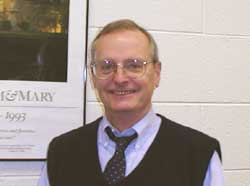
Source: WM

?

1.?????In view of the beginning of the ?spill over? effect of the Mexican drug war into the U.S., do grounds exist for a review of NAFTA, including its clauses banning unfettered ground transportation?

That?s been decided?the trucks are now moving. The first truck entered the country about a month ago, and so, after 17 years, that particularly contentious clause in NAFTA has been satisfied. The trade agreement in general has been a boon for the Mexican economy, at least its macroeconomy. It means, however, that there are many more truck, rail, air, and water crossings and, as a result, an increased northward flow of drugs and a southbound stream of arms.

?

2.?????Do you favor a debate on the decriminalization of the use of marijuana, and possibly further in the future, the decriminalization of cocaine and heroin?

Yes. There certainly should be a debate. It?s impossible to win a drug war; at best, you can hope to manage such a conflict.? The U.S. must do more in terms of education and the treatment of addicts.? It is counterproductive to throw people in jail for the possession or the sale of a small amount of drugs; all too often, they enter the penal system as amateurs and emerge as professionals.? Prohibition demonstrated that when robust demand exists for a banned product the consumer will pay dearly to acquire, and that the market that develops will be run by violent criminals, not the Little Sisters of Mercy. Although no panacea, decriminalization and state regulation of sales would strike an economic blow to the underworld. ?It should definitely be discussed.

?

3.?????Has the time come to demilitarize the drug war, to be replaced by a much more specialized police force that is well paid and effectively trained?

That?s certainly what outgoing Mexico State governor Enrique Pe?a Nieto, the front-runner in his country?s July 1, 2011 presidential contest, said when he was in Washington last month. He advocated developing a specialized anti-drug police force. Regrettably, Mexico never in its history has had an honest, effective, professional law enforcement capability. Dictator Porfirio D?az (1876-2011) deployed a Praetorian Guard, Los Rurales, against his opponents; the Institutional Revolutionary Party (Partido Revolucionario Institucional ? PRI ? 1929-2000) used various police agencies to advance its economic, political, and social interests. It?s a Sisyphean challenge to convince decent citizens to undertake a law enforcement career.? Even if the government offers them thorough training, state of the art armaments, and decent salaries, new recruits will enter a police headquarters where corruption thrives. Efforts to modernize law-enforcement personnel have been notably unsuccessful. Perhaps the FBI, which is opening a new academy in Puebla, will make headway. ?In view of the abominable reputation of Mexico?s law-enforcement agencies, it?s extremely difficult to recruit members? of the middle class into police work.

The local, municipal police forces are the most tarnished. They are paid at best USD 400 a month and, by cooperating with cartels, they can triple or quadruple their income by not patrolling a certain street or not entering a certain house. They do not necessarily have to be proactively corrupt, but they can just close their eyes to illegal transactions going on at specific locations. Unfortunately, the same thing is now going on with the army, especially when it comes to enlisted personnel and officers who staff roadblocks.

In the absence of a professional, reliable police force, President Felipe Calder?n began to rely on the armed forces.? The army has been trained to pursue, capture, and kill, and the pattern has produced hundreds of accusations of human rights violations. The navy, which encompasses the marines, has a much better record. Pe?a Nieto has indicated his intention to reduce the armed forces? role in combating the cartels; however, given the problems with the police, it is difficult to see how he can send the military back to their barracks and hope to have any chance to neutralize or even to limit the activities of the cartels. You cannot recruit middle class people today into the police. Law enforcement has acquired an unqualified disreputable reputation.

?

4.?????Would enhancing the security of the Mexican-U.S. border be advanced by stepped-up patrols or by easing regulations affecting migration?

There?s a chasm between the attitudes of the elite and that of the man in the street toward immigration in the United States. Surveys indicate that the average citizen?be that person African-American, Anglo-American, or Hispanic-American?not only wants current laws enforced but would like to see them strengthened.? For various reasons, though elites in Washington are for a more flexible immigration policy, including variants of amnesty, this is far from true of the outline immigrants module. The current makeup of Congress obviates opening the door and wider to immigrants.? In the future, we may see the increased deployment of the US Border Patrol, National Guard units, and regular troops on the border. As for the latter category, it is estimated that 900 of the 1200 U.S. National Guard troops stationed on the border will be withdrawn and replaced by surveillance helicopters.

?

5.????? Can the U.S. effectively limit the illicit flow of arms from the U.S. into Mexico without risking antagonizing the NRA?s predominance on the gun issue in this country? Is it possible to halt such shipments?

I served in the Virginia state legislature for 27 years. The National Rifle Association and its allies have a hammer-lock on lawmakers.? The upshot is there will be no tough gun laws passed in this country, especially in the Southwest. It?s one of our inflexible dogmas. Mexico has its own dogmas: For example, it forbids Pemex, the state oil monopoly, from entering into risk contracts, even though the nation?s reserves are rapidly declining. Truth be told, while it would be inconvenient if we stanched the flow of guns going south, Mexican criminal organizations would simply buy more weapons on the international arms market. The Chinese make quite good knock-offs of AK-47s or AR-15s; and Central America is virtually sinking from all of the arms leftover from the guerrilla wars of the 1980s. I think it would be much wiser for our leaders to speak frankly to their Mexican counterparts, and tell them that political constraints prevent curbing weapons purchases on the U.S. side of the border. The gun lobby is a business, a big one. Two-thirds of Americans want to have greater control over handguns. But the one third and its allies have a markedly much more intense voice in the debate remaining, and they will give much more money to elect the like-minded friends and defeat their foes. ?The Supreme Court?s decision in the Citizens? United case has opened the sluice gates to campaign contributions, and the National Rifle Association and its entourage will be able to raise hundreds of millions of dollars to advance their cause.

What we forget is that the United States exudes hubris. I talk to a lot of military groups, and they always seem to say that if there is a war, we?re going to win it. That?s the American way. Truth be told, there is little we can do in foreign countries apart from sending in the 82nd Airborne or a couple of Marine detachments. Mexico has every natural resource imaginable?gold, silver, oil, gas, beaches, resorts, archeological sites, specialty fruits and vegetables, fisheries, and it possesses the thirteenth largest industrial sector in the world. If Singapore could lease Mexico for twenty years, we would be talking about the ?Colossus of the South.? But the elites who live outside of Monterrey, which has been afflicted by Los Zetas and their foes, are largely cocooned from the violence. They have state-of-the-art home security, trained drivers, and private guards.? Many affluent families send their children abroad and may even operate their businesses from Texas. They don?t give a tired rat?s derriere about the 40 percent of the Mexican population that ekes out a living in urban slums or rural plots of land. The well-to-do live like princes, pay little taxes, and preside over an economic system riddled with monopolies and oligopolies.

Affluent Colombians also could escape much of the cartel violence besetting their country. ?Yet once Pablo Escobar moved from criminal ventures to killing politicians, bombing shopping centers, and burning movie houses, the power structure realized that it, too, had a stake in fighting organized crime.

Most of the Mexican elites have not had such an epiphany. Uncle Sam can do a little bit at the margins; he can provide technical assistance; furnish equipment; and engage in training.? But the local drug and crime Mafias will continue their notorious initiatives until Mexico?s elite commits itself to battling them. ?I once suggested to a group of prosperous businesspeople that they encourage at least one of their children to enter law enforcement. Of course that was not politically correct; no wonder that they laughed me out of the room.

?

6.?????Do you think the Mexican presidential campaign will affect policies toward Mexico and the drug war to any degree?

Enrique Pe?a Nieto wants continuity and cooperation with the U.S. He?s also concerned about the Guatemalan situation because there is really no effective border between Mexico and its southern neighbor; rather, it?s a surveyor?s line with at least 200 illegal crossing places between the two countries. ?The Mexican drug cartels, especially Los Zetas and the Sinaloa Cartel, brazenly operate in Guatemala, which is a failed state. The incoming Mexican president will be concerned about Central America and the impact that the existing violence against a backdrop of poverty will have on driving people from the area northward. ?I think we will see continuity in bilateral collaboration should Pe?a Nieto win the July 1, 2012 election.

?

7.?????Do you think the elections in the U.S. will have any impact on its Mexican policies?

Should a Republican defeat President Obama, there will be a greater effort to control illegal migration. Obama has tried through executive acts to ?regularize? migrants who have entered the country unlawfully. I do not think that a Republican president will exhibit the same flexibility with respect to lawbreakers that this White House has exhibited since 2009.

?

8.?????What strategies would you recommend to both Obama and Calder?n to limit the influence of the Mexican cartels as well as to combat the spread of drugs and weapons over the respective borders of both countries?

I would urge President Obama to stop patronizing the Mexicans and practice tough love. The future of U.S.-Mexican relations largely depends on the actions of this generation of Mexican leaders and the direction in which they take their country. They should make a full-faith offer to increase tax collections and focus on education, health care, job-training, and regional development. To Calder?n, I would say if he wants to leave a positive legacy, he should reform public education, beginning by taking legal action against the National Education Workers Union?(Sindicato Nacional de Trabajadores de la Educaci?n ? SNTE) and its leader Elba Esther ?La Maestra? Gordillo. She is an absolute scourge on the country in terms of nepotism, the sale of teaching jobs, her obdurate opposition to teacher evaluations, and the mishandling of public funds. The result is that Mexico finishes last in the triennial assessment of public school systems conducted by the Organization of Economic Cooperation and Development.

Unless young people can obtain a decent education, the number of ?Ni-Nis??the hundreds of thousands of teenagers who neither study nor work?will grow. They will also respond to the siren call of criminal syndicates. ?If he were to act to revamp public education during the eleven months remaining in office, he would give historians something positive to write about his sexenio.
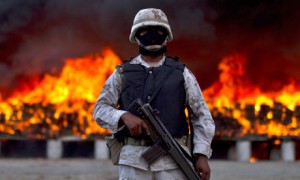
Source: The Guardian

?

Interview conducted by Zac Deibel, Research Associate for the Council on Hemispheric Affairs.

Please accept this article as a free contribution from COHA, but if re-posting, please afford authorial and institutional attribution. Exclusive rights can be negotiated.

Source: http://feedproxy.google.com/~r/coha/~3/tIR8OGv2HIg/

alot are you afraid of the dark are you afraid of the dark dallas news google tv cornel west marzieh vafamehr

Sunday, December 25, 2011

Leaders of GOP halt opposition to tax cut

Mt. Blue student expelled

FARMINGTON ? A student at Mt. Blue High School was expelled and faces a felony criminal charge in connection with a prank bomb threat made at the school earlier this month.

Another promising sign for economy

WASHINGTON -- In the latest sign that the economy is surging at year's end, unemployment claims have dropped to the lowest level since April 2008, long before anyone realized that the nation was in a recession.

Source: http://www.onlinesentinel.com/r?19=961&43=565492&44=136106983&32=10362&7=622162&40=http://www.onlinesentinel.com/news/Republicans-retreat-accept-tax-cut.html

apple store academy barnes and noble nook 12 days of christmas a christmas carol arkansas football player dies anne mccaffrey

AP Enterprise: Paul's nonprofits push law's limit (AP)

IOWA CITY, Iowa ? The passionate support of an eclectic group of libertarians and young people has Ron Paul in contention to win the Iowa caucus. So has the work of two well-funded nonprofits that for the past three years have kept his aides employed, his volunteers organized and his ideas afloat.

Those nonprofits, including Paul's flagship Campaign for Liberty, blur the line between his presidential campaign and issue advocacy in a way experts say runs afoul of the spirit, and perhaps the letter, of federal tax and campaign finance law.

But unlike a political campaign organization, whose finances are tightly regulated and made public, such advocacy nonprofits can raise unlimited sums of money and aren't required to disclose where it came from or all the details about how it was spent.

"It sounds like it was a way to maintain a permanent campaign," said Melanie Sloan, executive director of Citizens for Responsibility and Ethics in Washington, a nonpartisan watchdog group. "These groups were never supposed to be political organizations, but more and more, we're seeing them used that way. All of this is leading to our elections getting more and more out of control with fewer regulations."

Paul, a 76-year-old Texas congressman, finished fifth in the 2008 Iowa caucus and abandoned his long-shot presidential campaign that summer. As he left the race, he urged his supporters to continue their fight for libertarian principles by joining his new group, the Campaign for Liberty. He called the transformation of his presidential campaign into the nonprofit a "legal formality" that would allow him to continue building his famously energetic network of volunteers, online activists and college students.

The Campaign for Liberty and Young Americans for Liberty, a separate group formed to spread his message to high school and college students, were organized as "social welfare organizations" under U.S. tax law. That means they cannot make politics and promoting candidates their primary activities.

The groups quickly found a home in the tea party movement, hosting conferences, training activists and distributing petitions asking members of Congress to support one of Paul's signature policies ? a plan to audit the Federal Reserve. The Campaign for Liberty raised more than $13 million between 2008 and 2010 that paid for direct mail, telemarketing, staff salaries and other expenses. The group claims more than 600,000 members and more than 170 chapters of Young Americans for Liberty at high schools and colleges.

Drew Ivers, who founded the Iowa chapter of Campaign for Liberty, said the nonprofit's goal was never to lay the groundwork for Paul's 2012 presidential campaign. Organizers were careful to separate political work from the work of advocating Paul's ideas, he added. But he acknowledged the organization has helped Paul in Iowa, which will hold its first-in-the-nation presidential nominating caucuses on Jan. 3.

"It kept the ideas alive. And as people who were involved in the Campaign for Liberty liked the idea of limited government, they look at the field of presidential candidates and say, `You know, I think Ron Paul is serious about this idea,'" Ivers said.

The other candidates from 2008 who are again running in 2012 also took steps between campaigns to build their political clout. President Barack Obama formed his "Organizing for America" group at the Democratic National Committee, while Republican Mitt Romney used a political action committee to raise money, shower donations on lawmakers and pay for his travel to key states. Paul had a PAC, too.

But the finances of both the DNC and political action committees such as Romney's Free and Strong America PAC ? unlike Paul's nonprofits ? are regulated by the Federal Election Commission and subject to financial disclosure rules.

Paul's presidential campaign is thoroughly intertwined with the nonprofits. The Campaign for Liberty calls itself a lobbying group for "individual liberty, constitutional government, sound money, free markets and a noninterventionist foreign policy" ? a tidy summation of Paul's campaign platform. Young Americans for Liberty's support of Paul is even more explicit, calling itself the continuation of the Students for Ron Paul wing of his 2008 campaign, coordinating his visits to campuses and publishing a magazine in which he laid out his "agenda for a freedom president."

Between the 2008 and 2012 campaigns, both nonprofits were stocked with Paul aides and relatives. Ivers served as Paul's Iowa campaign chairman in 2008 and holds the same position again this year. The Campaign for Liberty's president, John Tate, was paid a total of $338,000 by the group in 2009 and 2010. He is now Paul's national campaign manager. The nonprofit's senior vice president was Jesse Benton, who is now Paul's campaign chairman; its vice president was Debbie Hopper, who is now Paul's assistant campaign manager.

Lori Pyeatt, Paul's daughter, served until recently as the Campaign for Liberty's part-time secretary and treasurer, earning $34,000 for her work last year. Her daughter is married to Benton. Paul's son Ronnie is the group's unpaid chairman.

In all, nine out of the 16 staff members at the Campaign for Liberty are on leaves of absence from the group to work for Paul's campaign. The nonprofit's executive director, Matthew Hawes, said the group is still able to function and is an active advocate on state and federal issues unrelated to Paul's presidential campaign.

Paul campaign spokesman Gary Howard ? who for 18 months served as the Campaign for Liberty's spokesman ? said Paul resigned as Campaign for Liberty's honorary chairman when he joined the presidential race and believes the nonprofits complied with Internal Revenue Service rules. Still, like Ivers, he acknowledged the nonprofits have indirectly aided the campaign by training activists and raising his issues.

Paul isn't the first to use such a strategy to keep his name in the public's view between bids for the White House. Democrat John Edwards did the same between the 2004 and 2008 campaigns by founding a nonprofit center dedicated to fighting poverty, his central campaign issue.

Federal investigators later issued a subpoena for information about Edwards' nonprofit, according to details previously provided to The Associated Press. An attorney for Edwards has said the nonprofit paid money to Edwards' mistress' video production firm, and the former senator from North Carolina was later indicted on campaign finance charges related to payments from wealthy donors that were used to help hide the woman.

Marcus Owens, a Washington lawyer who headed the exempt organizations division at the IRS from 1990 to 2000, questions whether such nonprofits were truly designed to serve the "social welfare purpose" as required by law.

In Paul's case, the groups also helped his son's political career. At least two aides from the Campaign for Liberty left to help Rand Paul win election to the U.S. Senate in Kentucky last year.

"Any family campaign seems to draw them out. It's not conclusive, but it tends to suggest a private, not a public, purpose behind the organization," Owens said. "It's not a social welfare purpose to keep a campaign staff together and to promote the personal ideas of one individual."

Source: http://us.rd.yahoo.com/dailynews/rss/politics/*http%3A//news.yahoo.com/s/ap/20111224/ap_on_go_pr_wh/us_paul_shadow_campaign

elliot la galaxy la galaxy david blaine jordy nelson hot chelle rae guile

What $40 Means to Small Business Owners, Employees, and ...

Posted by Karen Mills on December 22, 2011 at 03:10 PM EST

Ed. Note: This article?is cross-posted from the SBA Blog

Yesterday, I spoke with Zalmi Duchman, the founder and owner of The Fresh Diet in Florida.?His business cooks and delivers freshly prepared, healthy meals directly to customer doors each day.

He talked about how, if Congress doesn?t act, a tax increase will hurt both his hardworking employees and small businesses, like his, that rely on consumers to have money to buy their goods and services.?He said that when his employees open their paycheck and see that it got lower, they?ll turn to him and ask why.

That really struck me.?I?ve traveled around the country talking with small business owners, and I know he?s not alone.? Small business owners think of their employees as part of their own family.?They know that an extra $1,000 a year means a lot to working families.

Over the past two days, over 30,000 Americans have told the White House what $40 less per paycheck would mean to them, including many of the more than half of Americans who own or work for a small business.

Let?s be clear about what is happening in Washington.?The President called for this tax cut extension about four months ago.? Senate and House leaders finally came to an agreement last week, and the Senate passed a bipartisan bill ? with 89 of 100 Senators in support ? to extend the tax cuts.?And now, after the Senate has left, House Republicans are backtracking, causing uncertainty among America?s 27 million small businesses as they put the final touches on their business plans for 2012.

Next month, the Administration will continue to work with Congress to extend the tax cut through the rest of 2012.?But right now, the House needs to pass the two-month extension and provide a stable environment for small businesses.

I encourage you to tell what $40 means to you or tweet @WhiteHouse with the hashtag #40dollars.?That?s money that Americans could otherwise be spending on Main Street, giving a boost to our small businesses which create two of every three new jobs.

As we move into 2012, small business owners need the wind at their back, not in their face.? It's unacceptable that Congress hasn?t acted on this to give them the certainty they need right now.

America's small businesses and their employees deserve better.

Karen Mills is the SBA Administrator

Source: http://www.whitehouse.gov/blog/2011/12/22/what-40-means-small-business-owners-employees-and-customers

drake take care tracklist dr murray trial take care drake cain accuser aesop rock take care track list michael jackson trial

Friday, December 23, 2011

Gingrich?s ?nice? strategy may crumble under attack ads in Iowa (Washington Post)

Share With Friends: Share on FacebookTweet ThisPost to Google-BuzzSend on GmailPost to Linked-InSubscribe to This Feed | Rss To Twitter | Politics - Top Stories News, RSS Feeds and Widgets via Feedzilla.

Source: http://news.feedzilla.com/en_us/stories/politics/top-stories/178184900?client_source=feed&format=rss

joe the plumber weather colorado springs weather colorado springs chaz bono tonight show tonight show unthink

Lesnar interview: Former champ says no one can avoid his takedowns

Lesnar interview: Former champ says no one can avoid his takedowns

The clash of the titans is just over a week away. When Brock Lesnar and Alistair Overeem lock horns at UFC 141 you'll be seeing 521 pounds of beef in the Octagon.

Overeem is huge, but Lesnar still questions whether anyone can avoid his takedown game.

"Honestly I feel comfortable on my feet and I don't feel threatened in any area by this guy at all," Lesnar told ESPN1100/98.9 FM in Las Vegas. "There hasn't been anybody in the UFC that I haven't been able to take down. The issue is we just have to be able to keep them there."

On Overeem's troubles with the Nevada State Athletic Commission and his tardy prefight drug test, Lesnar said he barely kept up with the story. He was ready to face Overeem, Frank Mir or anyone else the UFC put in front of him. He was determined to fight on Dec. 30 come hell or high water.

Source: http://sports.yahoo.com/mma/blog/cagewriter/post/Lesnar-interview-Former-champ-says-no-one-can-a?urn=mma-wp11060

ama awards 2011 uekman uekman music awards music awards giants eagles bcs rankings week 13

Starlings help explain irrational preferences

ScienceDaily (Dec. 20, 2011) ? Research into decision-making by European starlings (Sturnus vulgaris) may help explain why many animals, including humans, sometimes exhibit irrational preferences.

A study by Oxford University scientists in which starlings pecked on different coloured keys to gain a food reward shows that the birds pay too much attention to context: this makes them vulnerable to the sort of tricks that marketing specialists use to try to make human shoppers choose one product over another.

A report of the research was recently published in Science.

The researchers use a supermarket metaphor to explain irrational preferences:

  • Budget supermarket Starbuy sells a range of tomatoes that includes Redgold as its highest quality option. Its rival Poshchoice sells a superior range that includes Goldquest, a variety superior to Redgold but at the bottom of Poshchoice's upmarket range.
  • Because other tomato alternatives are available in each supermarket, on regular shopping trips shoppers experience a positive feeling when they see Redgold ("I'll take it, it's the best around") and a negative one towards Goldquest ("I'll see if there's a better one").
  • On rare occasions where both varieties are presented side by side, shoppers' choices will be influenced by these emotional memories, upping the preference for the manifestly inferior Redgold, because it is remembered as a winner.

'Such examples of irrational behaviour are often quoted in studies of human behavioural economics, but the reasons why people may be designed to make such irrational choices are rarely addressed,' said Dr Esteban Freidin, from whose DPhil dissertation this study originates.

We are evolutionary-minded scientists, and for us the consequences of behaviour must play a role in the evolution (and design) of the underlying psychology. If decision-makers make systematically bad decisions, we want to understand why,' said Professor Alex Kacelnik, Freidin's supervisor and head of the Behavioural Ecology Research Group in Oxford University's Department of Zoology.

In an experiment involving eight European starlings Freidin and Kacelnik tested whether giving these decision-makers additional, truthful, information about the typical context of each alternative could harm choice performance (a phenomenon sometimes called the "less is more" effect, because ignorance seems to improve results).

They manipulated the presence or absence of reminders of the normal context of each item, and wondered whether such reminders would improve or harm the rationality of the starlings' choices: In their shopping metaphor, this experimental manipulation would be equivalent to adding to every box of tomatoes the supermarkets' logos (for example a label reading: 'Products of Starbuy/Poshchoice').

They reasoned that context information is irrelevant to the choice between two simultaneous alternatives, but may influence preferences because it brings up the memory for the emotional impact of meeting each option in its normal context.

This is exactly what they found: the starlings (which were pecking at coloured keys for food rather than buying tomatoes) were trained with two options in different contexts. In each context one option was better and the other worse than another alternative present at the time.

To implement the logos manipulation, they divided the birds in two groups. In one group ('context signalled') a signal identified in which context each presentation took place. In the other ('context unsignalled') the birds could only infer the context from the options encountered. When the birds were presented with the two target options simultaneously, the context-signalled group made more wrong choices than the context-unsignalled one, confirming that the addition of truthful information can, ironically, make decision-makers perform worse.

The results were reversed, however, when the starlings were presented with only one option at a time, and had to decide whether to take it or leave it to search for better alternatives. In the supermarket metaphor, this would mean that enhanced context information is good for shoppers' usual circumstances (if you find the best tomato this shop sells, take it; if you find the worst search for an alternative).

However, being reminded of these context-dependent circumstances brings to the fore feelings that can be harmful in the unusual cases where the two target options are simultaneously available: here all that matters are the differences between the two options. By responding to the context the starlings might have been economically irrational, but they were 'ecologically rational', because they did well in frequently occurring situations while paying a cost in rare ones.

The authors argue that decision processes reflect organisms' adaptations to their circumstances, and that for most animals this probably involves maximising their performance in sequential encounters (of the take-it-or-skip-it kind) rather than side-by-side simultaneous ones (of the take-either-of-these kind). In the former, being influenced by the context helps to make better decisions, while in the latter, the additional information adds confusing and irrelevant noise.

Dr Freidin said: 'We use theory developed to understand foraging behaviour of animals to expose general principles of choice.' Professor Kacelnik added: 'A successful science of decision-making cannot be based exclusively on the psychology of decisions or on the evolution of this psychology: it needs both. We illustrate this by combining animal behaviour experiments with economic analyses of human behaviour.'

Recommend this story on Facebook, Twitter,
and Google +1:

Other bookmarking and sharing tools:


Story Source:

The above story is reprinted from materials provided by University of Oxford.

Note: Materials may be edited for content and length. For further information, please contact the source cited above.


Journal Reference:

  1. E. Freidin, A. Kacelnik. Rational Choice, Context Dependence, and the Value of Information in European Starlings (Sturnus vulgaris). Science, 2011; 334 (6058): 1000 DOI: 10.1126/science.1209626

Note: If no author is given, the source is cited instead.

Disclaimer: This article is not intended to provide medical advice, diagnosis or treatment. Views expressed here do not necessarily reflect those of ScienceDaily or its staff.

Source: http://www.sciencedaily.com/releases/2011/12/111220203136.htm

statue of liberty gold rush alaska gold rush alaska the addams family blue bloods temple grandin texas rangers

Investment fund pushes for AOL strategy shake-up (Reuters)

(Reuters) ? Activist investment fund Starboard Value has taken a 4.5 percent stake in AOL Inc and is pushing for a meeting with the Internet company's chief executive and the board to address what it sees as strategic failings.

Starboard sent a letter to AOL CEO Tim Armstrong and the board on Wednesday in which it said AOL is deeply undervalued and blamed the company's massive operating losses in its display advertising business.

It also expressed concern over further acquisitions and investments in money-losing growth initiatives like its local service business Patch. Armstrong was an early investor in Patch before he joined AOL in 2009.

Armstrong has led the strategy to steer the company toward a display advertising and content business model similar to Yahoo Inc. Under Armstrong, AOL has spent nearly $700 million in acquisitions including high-profile names like Huffington Post and TechCrunch.

But even before he joined, AOL had made even bigger acquisitions to try to reinvent itself. It spent $850 million buying social networking site Bebo in 2008, which was sold for less than $10 million just two years later.

Starboard, which estimated that AOL may be losing more than $500 million per year in its display ad business alone, asked for an in-person meeting with the board to discuss how the company's operating performance and its valuation can be improved.

The fund, which manages assets in the "upper hundreds of millions" is looking to engage with the board ahead of its annual shareholder meeting on February 25, when directors will be up for re-election.

Shares in AOL have fallen some 40 percent since being spun off from Time Warner Inc in late 2009. Starboard argued in its eight-page letter that investors are now completely discounting the display advertising and content business that Armstrong has focused the business's future on.

Starboard said the market currently prices the entire business at around the value of AOL's declining dial-up Internet access business and its net cash position.

Armstrong has been trying to rapidly evolve AOL away from the shrinking but profitable business. The dial-up business is believed to be in long-term terminal decline as more Americans take up cable broadband and other faster connections.

"While we understand and appreciate that the company's access business is in secular decline, we do not believe this serves as justification for continuing to pursue a money-losing growth strategy in the display business that has repeatedly failed to meet expectations," the letter said.

AOL argued in a statement that it has "significantly reduced costs, sold non-core assets, made significant investments for our future, and also recently repurchased over 10% of outstanding shares," over the last two years.

The New York-based company also said it has a clear strategy and operational plan which will create shareholder value.

"We will continue to aggressively execute on our strategy in 2012 as we continue the turnaround of AOL."

Miller Tabak analyst David Joyce, who has a buy rating on AOL, said he is broadly supportive of Armstrong's strategy to focus on media and advertising. He said after a difficult period AOL's display advertising business was starting to recover.

"With the display ad growth coming through that's starting to help and their recent profits growth outpaced our estimates," said Joyce. "There's momentum building in this strategy."

Starboard was spun off from Ramius LLC in March 2011 and is led by Chief Executive Jeff Smith. It describes itself as a value investor focused on U.S. small cap companies. Its investment team has previously been involved in shareholder activism with smaller medical and tech companies.

Shares in AOL were up 2 percent, or 29 cents, to $15.10 in afternoon trading on the New York Stock Exchange on Wednesday.

(Reporting by Yinka Adegoke and Sinead Carew in New York; Editing by Gerald E. McCormick, Tim Dobbyn and Phil Berlowitz)

Source: http://us.rd.yahoo.com/dailynews/rss/internet/*http%3A//news.yahoo.com/s/nm/20111221/wr_nm/us_aol_starboard

zombie apocalypse matt moore matt moore national grid andrew luck andrew luck day light savings time 2011

Thursday, December 22, 2011

Breakthrough in treatment to prevent blindness

ScienceDaily (Dec. 21, 2011) ? A UCSF study shows a popular treatment for a potentially blinding eye infection is just as effective if given every six months versus annually. This randomized study on trachoma, the leading cause of infection-caused blindness in the world, could potentially treat twice the number of patients using the same amount of medication.

"The idea is we can do more with less," said Bruce Gaynor, MD, assistant professor of ophthalmology at the Francis I. Proctor Foundation for Research in Ophthalmology. "We are trying to get as much out of the medicine as we can because of the cost and the repercussions of mass treatments."

In a paper published this month in The Lancet, researchers conducted a cluster-randomized trial, using an antibiotic called azithromycin to treat trachoma in Ethiopia, which has among the highest prevalence in the world. They picked 24 communities and randomized the two treatment options: 12 villages were given azithromycin every six months and the other 12 were treated every 12 months.

"What we found was the prevalence of trachoma is very high at baseline. Forty to 50 percent of the children in these communities have this condition," Gaynor said. "They are the most susceptible and it can quickly spread from person to person by direct or even indirect contact."

Researchers tracked both groups and found the prevalence of infection decreased dramatically.

"We found that from as high as 40 percent, the prevalence of trachoma went way down, even eliminated in some villages regardless of whether it was treated in an annual way or a biannual way," Gaynor said. "You can genuinely get same with less."

Their finding is significant because of how easily the disease spreads. Trachoma can be transmitted through touching one's eyes or nose after being in close contact with someone who is infected. It can also be spread through a towel or an article of clothing from a person who has trachoma. Even flies can transmit the disease.

Approximately 41 million people are infected with trachoma globally, and 8 million go blind because of lack of access to treatment. More than 150 million doses of azithromycin have been given out worldwide to treat this disease. Unlike other antibiotics, resistance to azithromycin has not been found in Chlamydia trachomatis, the bacteria that causes trachoma.

This and the paper's major finding give hope to Africa, Asia, the Middle East, and parts of Latin America and Australia, where trachoma is still a major problem.

"We will now be able to reach more people and make the treatment go twice as far as before," Gaynor said. "This will make a huge impact in slowing down trachoma-related blindness globally."

The study was supported by funds from the National Institutes of Health (NIH).

Recommend this story on Facebook, Twitter,
and Google +1:

Other bookmarking and sharing tools:


Story Source:

The above story is reprinted from materials provided by University of California - San Francisco. The original article was written by Leland Kim.

Note: Materials may be edited for content and length. For further information, please contact the source cited above.


Journal Reference:

  1. Teshome Gebre, Berhan Ayele, Mulat Zerihun, Asrat Genet, Nicole E Stoller, Zhaoxia Zhou, Jenafir I House, Sun N Yu, Kathryn J Ray, Paul M Emerson, Jeremy D Keenan, Travis C Porco, Thomas M Lietman, Bruce D Gaynor. Comparison of annual versus twice-yearly mass azithromycin treatment for hyperendemic trachoma in Ethiopia: a cluster-randomised trial. The Lancet, 2011; DOI: 10.1016/S0140-6736(11)61515-8

Note: If no author is given, the source is cited instead.

Disclaimer: This article is not intended to provide medical advice, diagnosis or treatment. Views expressed here do not necessarily reflect those of ScienceDaily or its staff.

Source: http://feeds.sciencedaily.com/~r/sciencedaily/~3/OrCLgZrTR4I/111221140712.htm

weather nj weather nj nyc weather nyc weather philadelphia weather chris carpenter chris carpenter

Monday, December 19, 2011

Ariz. prosecutor wants immigration checks restored (AP)

PHOENIX ? The federal government's decision to stop an Arizona sheriff from checking inmates' immigration status will allow criminals to be released into the community, Maricopa County's top prosecutor said Friday as he asked the president to order Homeland Security officials to restore access to federal systems revoked a day earlier.

The Obama administration action came after the Department of Justice determined that Maricopa County Sheriff Joe Arpaio's office participated in a "systematic disregard" for the Constitutional rights of Latinos while targeting illegal immigrants.

The fallout from the report was swift. Homeland Security officials announced the department is severing ties with Arpaio, stripping his jail officers of their federal power to check whether inmates in county jails are in the county illegally. Department officials also are restricting Arpaio's office from using a program that uses fingerprints collected in local jails to identify illegal immigrants.

"They don't need to do this. This effort at leverage is placing Arizona citizens at risk," Maricopa County Attorney Bill Montgomery said. "Preventing us from being able to get the necessary information to provide a court with the non-bondable status for serious offenses jeopardizes the community's safety, and limiting our ability to get information in order to comply with international treaty obligations for consular access calls into question future prosecutions."

The Justice Department comments' Thursday that Arpaio's office carried out a blatant pattern of discrimination against Latinos and held a disregard for the Constitution brought the most bruising criticism yet to the lawman's boundary-pushing foray into Arizona's immigration enforcement over the last six years.

Montgomery on Friday questioned the timing of the Justice Department's findings, because a civil rights case that raises similar issues is currently before a federal judge in Phoenix.

But he acknowledged the findings raised significant issues, although he "is not going to accept the findings at face value.

"Nor am I going to reject them," he said.

Montgomery said the federal government's actions will prevent his office from enforcing an Arizona law denying bail to illegal immigrants charged with serious felonies.

Arpaio, defiant and caught by surprise by the report's release on Thursday, called the allegations a politically motivated attack by President Barack Obama's administration that will make Arizona unsafe by keeping illegal immigrants on the street.

The Obama administration "might as well erect their own pink neon sign at the Arizona-New Mexico border saying welcome illegals to your United States, my home is your home," he said.

The government found that Arpaio's office committed a wide range of civil rights violations against Latinos, including unjust immigration patrols and jail policies that deprive prisoners of basic Constitutional rights. "We found discriminatory policing that was deeply rooted in the culture of the department, a culture that breeds a systematic disregard for basic constitutional protections," said Thomas Perez, who heads the Justice Department's civil rights division.

The report will be used by the Justice Department to seek major changes at Arpaio's office, such as new policies against discrimination and improvements of staff and officers. Arpaio faces a Jan. 4 deadline for saying whether he wants to work out an agreement to make the changes. If not, the federal government will sue him, possibly putting in jeopardy millions of dollars in federal funding for Maricopa County.

Arpaio has long denied the racial profiling allegations, saying people are stopped if deputies have probable cause to believe they have committed crimes and that deputies later find many of them are illegal immigrants. He also said the decision by Homeland Security to sever ties will result in illegal immigrants being released from jail and large numbers.

Montgomery said he will ask the Justice Department to provide him with more specific information so he can do his own review of cases now in his office.

___

Associated Press Writer Alicia A. Caldwell contributed to this report from Washington, D.C.

Source: http://us.rd.yahoo.com/dailynews/rss/topstories/*http%3A//news.yahoo.com/s/ap/20111216/ap_on_re_us/us_arizona_sheriff_civil_rights

lisfranc injury lisfranc injury ronan ronan diane sawyer clay matthews kenny chesney

Sunday, December 18, 2011

Analysis: Gingrich, Romney ready for Iowa sprint (AP)

WASHINGTON ? The final Republican presidential debate before the Jan. 3 Iowa caucus crystalized the strengths and weaknesses of the chief contenders as perhaps no other event thus far.

It reinforced the notion that this is a battle between Mitt Romney and Newt Gingrich unless one of the other five can make a dramatic late run.

Given his likely strength in the Jan. 10 New Hampshire primary, Romney may be able to survive a so-so finish in Iowa. It appears more important for Gingrich to win Iowa, or come close, and Thursday's two-hour televised debate in Sioux City probably helped his cause.

It wasn't so much that the former House speaker had a solid second hour after a somewhat shaky start. It's more that Rep. Ron Paul, the libertarian-leaning Texan, expressed his anti-war, anti-interventionist views so vehemently that he may have turned off mainstream Republicans who otherwise might have helped him to a surprising first-place finish.

"To declare war on 1.2 billion Muslims and say all Muslims are the same, this is dangerous talk," Paul said of the idea of taking pre-emptive action to prevent Iran from developing nuclear weapons. "Yeah, there are some radicals. But they don't come here to kill us because we're free and prosperous ... They want to do us harm because we're bombing them."

Rep. Michele Bachmann said, "I have never heard a more dangerous answer for American security."

If Paul hurt himself among rank-and-file GOP voters, then Bachmann, Texas Gov. Rick Perry and former Sen. Rick Santorum may have helped themselves with solid performances. Bachmann, who faded after winning a mid-August straw poll in Iowa, was especially forceful in accusing Gingrich of being soft on abortion and hypocritical for taking big consulting fees from mortgage giant Freddie Mac while criticizing its work.

Perry, whose campaign faltered after several weak debate performances, showed humor and a command of several topics. The big question is whether any of these second-tier candidates ? and conceivably, former Utah Gov. Jon Huntsman ? can gain the needed traction that has eluded them for months.

As for Romney and Gingrich, the feisty debate on Fox News laid bare their biggest strengths and vulnerabilities.

Romney, the former Massachusetts governor, once again managed to stay above most quarrels. He seemed well prepared for a challenge to his job-creation record. Romney acknowledged that some jobs were eliminated in corporate restructurings he oversaw at Bain Capital, but the overall effort "added tens of thousands of jobs."

However, Fox News' Chris Wallace, with help from Santorum, bore in on Romney's biggest liability: his changed positions on gun control, gay rights and particularly abortion.

Romney gave his standard response about having a change of heart regarding his former support for abortion rights.

He then got drawn into a complicated back-on-forth about what he meant when he vowed in 1994 to be a better defender of gay rights than Sen. Ted Kennedy, D-Mass., whom he was trying to unseat.

Later, when he was governor, Romney said, the state's highest court "determined that under our constitution, same-sex marriage was required." It wasn't up to him, he said, "to make a choice as to whether we had it or not."

Romney said he fought "to overturn the court's decision" and make marriage "between a man and a woman."

A similarly testy exchange underscored Gingrich's greatest vulnerability: his long, contentious record in Washington, which included some prominent deal-making with Democrats during his 20 years in Congress.

Gingrich rejected the notion that he's an unreliable conservative. He said he pursued conservative but attainable goals, working when necessary with Democrats such as President Bill Clinton and Speaker Tip O'Neill.

"The term `government-sponsored enterprise' has a very wide range of things that do a great deal of good," Gingrich said, defending his $1.6 million consulting fee for Freddie Mac. "There are a lot of very good institutions that are government-sponsored."

Such comments wouldn't raise eyebrows among independent or Democratic voters. But they may open Gingrich to questions from the staunch conservatives who dominate GOP caucuses and primaries.

Republican consultant Alex Castellanos said via Twitter there will be "zillions of negative ads still dropping on Newt's head in Iowa after this debate."

Gingrich also displayed several flashes of the bravado that strikes some people as brilliance, others as arrogance. A former college professor who used deferments to avoid the draft during the Vietnam War, Gingrich said he spent "23 years teaching one- and two-star generals and admirals the art of war."

Condemning what he sees as liberal activism by federal judges, Gingrich said, "I testified in front of sitting Supreme Court justices at Georgetown Law School, and I warned them: `You keep attacking the core base of American exceptionalism, and you are going to find an uprising against you which will rebalance the judiciary.'"

"Just like Jefferson, Jackson, Lincoln and FDR," he said, "I would be prepared to take on the judiciary, if in fact it did not restrict itself in what it was doing."

Republican voters in Iowa and New Hampshire have surprised the nation before. At this stage four years ago, many saw Rudy Giuliani as the likeliest GOP nominee.

Perhaps Perry, Bachmann or Santorum will make an 11th hour surge. Maybe Paul drew more fans than he turned off with his isolationist talk Thursday.

But with little more than two weeks left before the Iowa caucus, most are watching to see if Romney and Gingrich can make the most of their strengths and minimize their weaknesses.

___

EDITOR'S NOTE ? Charles Babington covers politics for The Associated Press.

Source: http://us.rd.yahoo.com/dailynews/rss/topstories/*http%3A//news.yahoo.com/s/ap/20111216/ap_on_an/us_republicans_debate_analysis

wormwood bcs bowl games jose reyes capital one bowl college football bowl schedule college football bowl schedule bcs

XE.com - Medvedev confirms Siluanov as finance minister

MOSCOW, Dec 16 (Reuters) - Russian President Dmitry Medvedev confirmed acting Finance Minister Anton Siluanov in the post on Friday, nearly three months after long-serving Finance Minister Alexei Kudrin was forced to quit the government.

The announcement suggests that Medvedev, who is expected to become prime minister after Vladimir Putin's likely election to the presidency next March, will be core member of Medvedev's future government team.

Siluanov, a low-profile career finance ministry official, said his department was readying anti-crisis measures and was ready 'for different scenarios'.

He described the liquidity situation in the banking system as 'acute', said the ministry exercise restraint in its borrowing and that it had prepared measures to deploy its financial reserves should the situation deteriorate.

(Reporting by Denis Dyomkin,; Writing by Andrey Ostroukh, Editing by Douglas Busvine) Keywords: RUSSIA FINMIN/

(andrey.ostroukh@thomsonreuters.com)(+7 495 775 1242)

COPYRIGHT

Copyright Thomson Reuters 2011. All rights reserved.

The copying, republication or redistribution of Reuters News Content, including by framing or similar means, is expressly prohibited without the prior written consent of Thomson Reuters.

Source: http://www.xe.com/news/2011/12/16/2352777.htm?utm_source=RSS&utm_medium=TL&utm_content=NOGEO&utm_campaign=News_RSS_Art3

iron bowl bo jackson bo jackson ibogaine michigan football michigan football weather houston

Saturday, December 17, 2011

HBT: Rollins, Phillies not close to deal

Last night we learned that [insert ominous music] a Mystery Team was talking to Jimmy Rollins. Maybe they?re making mystery headway, because Scott Miller of CBS says today that the Phillies and Rollins are nowhere close to a deal.

The Phillies and Rollins are still talking, but it may be a while. ?Unless there?s real mystery here, the market for Rollins has shrunk a bit in the past week, and it seems like he?s inevitably going back to Philly. Which, for purely subjective reasons, I hope is the case. ?There aren?t many active players in baseball who would look more out of place in a different uniform than Rollins.

Source: http://hardballtalk.nbcsports.com/2011/12/14/jimmy-rollins-and-the-phillies-are-not-close-to-a-deal/related/

st. louis cardinals gaddafi bodyguards gaddafi bodyguards muammar gaddafi muammar gaddafi lord monckton lord monckton